 Official website
Ingredient 1 of 6
Magnesium Glycinate in Neuralisse: 80 mg Per Capsule, Explained
Each Neuralisse capsule gives 80 mg of magnesium (19% of the Daily Value) as magnesium glycinate, the first and heaviest ingredient in the 575 mg blend. It is the only amount the label prints. Adults need 310 to 420 mg a day from all sources, and the NIH sets a 350 mg daily limit for magnesium from supplements.
Written by the Neuralisse editorial teamUpdated
The basics
What is magnesium glycinate?
Magnesium glycinate is the mineral magnesium bound to glycine, a small amino acid. In Neuralisse it is the source of the 80 mg of magnesium printed on the label.
Magnesium is an essential mineral. The NIH says the body uses it to help run muscles and nerves, keep blood sugar and blood pressure in range, and build bone and protein (ODS, Magnesium). Most people get some from nuts, seeds, beans, whole grains and leafy greens.
| Label name | Magnesium Glycinate |
|---|---|
| What it is | Magnesium bound to the amino acid glycine · Mineral |
| Position in the blend | 1 of 6 (labels list blend ingredients from most to least by weight) |
| Amount per capsule | 80 mg of magnesium (19% DV), printed on the label |
| Amount used in research | RDA 310-420 mg a day from all sources; supplement upper limit 350 mg |
| Strength of evidence | Essential nutrient |
| Why it is used | Mineral the body needs for nerve and muscle function |
| Main caution | Diarrhea at high doses; take 2 hours apart from bisphosphonates and some antibiotics; ask a doctor if you have kidney disease. |
On the label
How much magnesium is in Neuralisse?
Each capsule has 80 mg of magnesium, listed as 19% of the Daily Value. It is the only ingredient with its own printed amount on the Supplement Facts panel.
The panel prints magnesium on its own line, then notes it comes "as Magnesium Glycinate from proprietary blend". Magnesium glycinate is also listed first in the 575 mg blend, so it is the heaviest of the six ingredients.
The 80 mg counts only the magnesium, not the glycine attached to it. So the compound itself weighs more than 80 mg. That leaves less room in the blend for the other five ingredients, which is why their real amounts are probably below their ceilings.
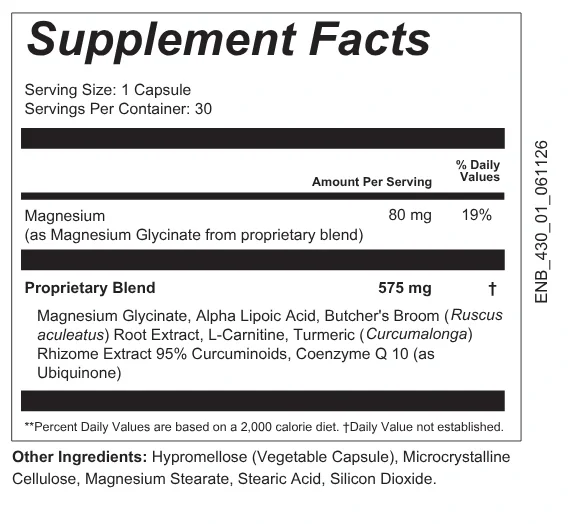
| Printed amount | 80 mg of magnesium per capsule |
|---|---|
| Percent Daily Value | 19% (Daily Value is 420 mg) (FDA, Daily Values) |
| Form | Magnesium glycinate, inside the 575 mg blend |
| Position in blend | 1 of 6, the heaviest ingredient |
| Per bottle | 2,400 mg over 30 capsules |
Daily needs
How does 80 mg compare with how much magnesium you need?
80 mg covers about one-fifth of an adult's daily need. The NIH says adults need 310 to 420 mg a day from food, drinks and supplements combined (ODS, Magnesium).
| Measure | Amount | One capsule |
|---|---|---|
| Women 31 and older, daily need | 320 mg | 80 mg, about 25% |
| Men 31 and older, daily need | 420 mg | 80 mg, about 19% |
| Upper limit from supplements and medicines | 350 mg | 80 mg, about 23% |
The 350 mg limit covers magnesium from supplements and medicines only. Food does not count toward it. So the question is what else you take: a multivitamin, a separate magnesium pill, or a magnesium antacid or laxative all add up.
Research
Does magnesium glycinate help nerves?
Magnesium is needed for normal nerve and muscle function, but our sources show no trial where magnesium glycinate improved nerve symptoms. Its value in Neuralisse is as a basic nutrient, not as a proven nerve aid.
The NIH explains that low magnesium is more likely in some groups. These include people with type 2 diabetes, older adults, people with long-term alcohol use and people with some digestive conditions (ODS, Magnesium (HP)). For them, a doctor may check levels and suggest food or supplement changes.
Some ads say glycinate is the best form of magnesium. The NIH fact sheet does not rank magnesium glycinate against other forms (ODS, Magnesium (HP)). We do not make that claim either. Compare forms in our post on magnesium glycinate vs other forms.
Safety
Is magnesium glycinate safe to take every day?
At 80 mg a day, magnesium is well under the NIH supplement limit and is unlikely to cause problems for most healthy adults. Too much from supplements can cause diarrhea, nausea and stomach cramps (ODS, Magnesium).
The bigger issue is timing with some medicines. The NIH health professional sheet lists these (ODS, Magnesium (HP)):
- Bisphosphonates for bone loss, such as alendronate: take them at least 2 hours apart from magnesium.
- Tetracycline and quinolone antibiotics: take the antibiotic 2 hours before or 4 to 6 hours after magnesium.
- Diuretics: some raise magnesium loss, others lower it.
- Proton pump inhibitors taken for a long time can lower magnesium levels.
Weak kidneys cannot clear extra magnesium well, which raises the risk of too much building up (ODS, Magnesium (HP)). Talk to your kidney doctor before any magnesium supplement, including Neuralisse.
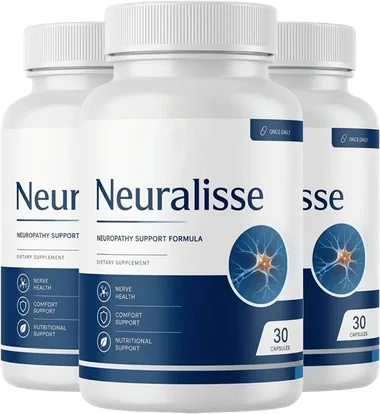
Try Neuralisse for 60 days1 capsule a day · from $49 a bottle · free U.S. shipping on 3 or 6 bottles
Order nowCheck first
Who should ask a doctor before taking magnesium glycinate?
Medicine users
Anyone on bisphosphonates, the antibiotics above, diuretics or long-term acid reducers.
Kidney patients
Anyone with kidney disease or reduced kidney function.
Stacked supplements
Anyone already taking magnesium, a multivitamin or magnesium antacids.
Our take
Is the magnesium in Neuralisse worth having?
It is the most transparent part of the formula. You know the exact amount, it is a modest dose, and it sits well under the safety limit. It is also not a nerve treatment, and 80 mg is a top-up, not a full day's need.
Pros
- Only ingredient with a printed amount
- 80 mg is about 23% of the supplement limit
- An essential nutrient with clear NIH guidance
- Easy to add up with your other supplements
Cons
- No nerve trial of magnesium glycinate in our sources
- Covers only about one-fifth of daily needs
- Needs spacing from some common medicines
- Uses much of the blend's weight, leaving less for the rest
All six
What else is in Neuralisse besides magnesium?
Five more ingredients share the blend, starting with alpha-lipoic acid in second place. None of them has a printed amount.
If you feel numbness, tingling or burning in your feet or hands, see a doctor before trying any supplement. Those signs can come from diabetes or other conditions that need care (NIDDK, Peripheral neuropathy). For timing tips, read how to use Neuralisse, or compare all six on the ingredients overview.
FAQ
Magnesium glycinate in Neuralisse FAQ
How much magnesium is in Neuralisse?
Each Neuralisse capsule contains 80 mg of magnesium, which the label lists as 19% of the Daily Value. It comes from magnesium glycinate in the proprietary blend. At one capsule a day, that is 2,400 mg of magnesium across a 30-capsule bottle. It is the only ingredient with a printed amount.
Is 80 mg of magnesium a day too much?
No, not for most healthy adults. The NIH sets the upper limit for magnesium from supplements and medicines at 350 mg a day, and 80 mg is about 23% of that. Add up any other magnesium pills, multivitamins or antacids you take, and ask a doctor if you have kidney disease.
Can I take magnesium glycinate with alendronate or other bone medicines?
Yes, but space them. The NIH says to take bisphosphonates such as alendronate at least 2 hours apart from magnesium, because magnesium can block their absorption. Since Neuralisse contains 80 mg of magnesium, the same spacing applies. Your pharmacist can help set a schedule that fits.
Can I take Neuralisse with antibiotics?
Some antibiotics need spacing. The NIH advises taking tetracycline or quinolone antibiotics, such as doxycycline or ciprofloxacin, 2 hours before or 4 to 6 hours after magnesium. Ask your pharmacist which group your antibiotic belongs to, and pause or space the capsule as they advise.
Is magnesium glycinate the best form of magnesium?
There is no clear answer in the NIH fact sheets, which do not rank magnesium glycinate above other forms. Glycinate is magnesium bound to the amino acid glycine. Claims that it is the best absorbed form go beyond what the NIH says, so treat them with care.
What are the side effects of magnesium glycinate?
At 80 mg a day, side effects are unlikely for most people. The NIH says high supplement intakes can cause diarrhea, nausea and stomach cramps. People with kidney disease face a higher risk of magnesium building up, so they should ask a doctor before starting any magnesium supplement.
Does magnesium help with numbness or tingling in the feet?
Our sources show no trial where magnesium glycinate eased numbness or tingling. Magnesium supports normal nerve function, but those symptoms can signal diabetes or another condition. See a doctor to find the cause, since treatment depends on what is behind them.
Who wrote this
Written and reviewed by
Plain-language pages built from the bottle label, the order page and linked public health sources such as NIH, FDA and CDC.
Last updated . Read our editorial standards and how we check reviews. This website is run by an American stocking outlet for Neuralisse, not by the manufacturer. We earn money when you buy through our order links.
Keep reading
More about Neuralisse
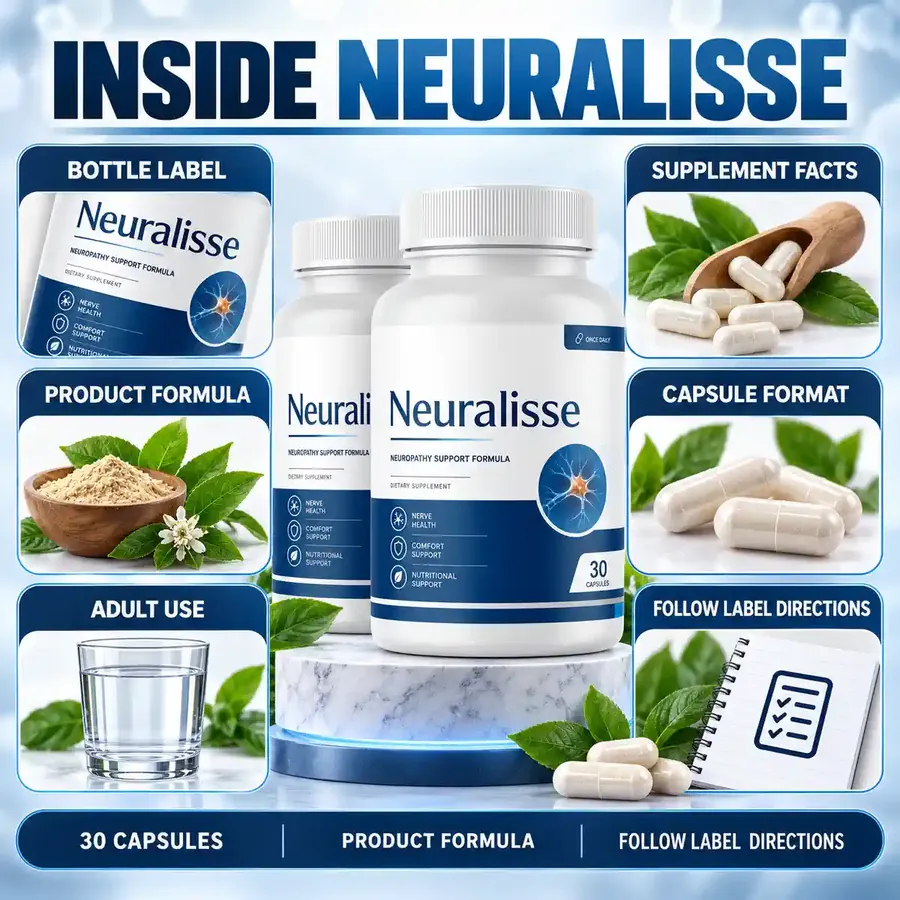
Ingredients
All six Neuralisse ingredients in label order, with the most each can weigh and what studies used.
Read moreSupplement Facts
Every line of the Neuralisse label decoded, with the blend math and the details the bottle leaves out.
Read more
How to use
One capsule a day, a steady time, a 2-hour medicine gap and simple rules for missed doses and travel.
Read moreAuthorized American Neuralisse outlet
Ready to try Neuralisse?
Pick a pack. One capsule a day, and every pack lasts at least 60 days, the whole money-back window.
- Secure checkout
- 60-day money-back window
- Ships from the U.S. with tracking