 Official website
Ingredient 6 of 6
Coenzyme Q10 in Neuralisse: Label Ceiling, Research Doses and Interactions
Coenzyme Q10 (as ubiquinone) is the last of six ingredients in the Neuralisse 575 mg blend, so each capsule holds at most 95 mg. The real amount is not printed. LiverTox lists typical doses of 300 to 1,200 mg a day, and larger trials have not confirmed benefits. It may interact with warfarin and insulin.
Written by the Neuralisse editorial teamUpdated
The basics
What is coenzyme Q10?
Coenzyme Q10, or CoQ10, is a vitamin-like compound your body makes on its own. It sits inside the tiny power plants of your cells and helps them turn food into energy.
CoQ10 also works as an antioxidant. Levels in the body tend to fall with age, and some medicines lower them too. That is why it is sold so widely as a supplement.
The Neuralisse label lists it as "Coenzyme Q 10 (as Ubiquinone)." Ubiquinone is the common, oxidized form found in most CoQ10 products. The other form, ubiquinol, is not what the label names.
| Label name | Coenzyme Q 10 (as Ubiquinone) |
|---|---|
| What it is | Ubiquinone · Antioxidant the body makes |
| Position in the blend | 6 of 6 (labels list blend ingredients from most to least by weight) |
| Amount per capsule | Not disclosed; at most 95 mg by label math |
| Amount used in research | Typical doses 300-1,200 mg a day |
| Strength of evidence | Not confirmed in larger trials |
| Why it is used | Part of how cells make energy |
| Main caution | May interact with warfarin and insulin; mild stomach upset or trouble sleeping. |
Label math
How much CoQ10 is in Neuralisse?
No more than 95 mg per capsule. CoQ10 is the sixth and last ingredient in a 575 mg blend, and the label prints no amount for it.
FDA rules say a proprietary blend lists its ingredients from heaviest to lightest (FDA, Labeling guide). Since five ingredients come first, each weighs at least as much as CoQ10. Six equal shares of 575 mg are about 95 mg each. CoQ10 can only be that much if every ingredient weighed the same, which is very unlikely.
| Ingredient | Position | Most it can weigh |
|---|---|---|
| L-carnitine | 4 of 6 | At most 143 mg |
| Turmeric extract | 5 of 6 | At most 115 mg |
| Coenzyme Q10 | 6 of 6 | At most 95 mg |
Being last also means CoQ10 could be a small amount. Nothing on the label sets a floor. The first ingredient, magnesium glycinate, must carry 80 mg of elemental magnesium, so the five ingredients after it share what is left.
The evidence
What does research say about CoQ10?
The research is not convincing so far. LiverTox reports that larger trials have not confirmed the benefits seen in early, smaller studies (LiverTox, CoQ10).
CoQ10 has been tested for several conditions, with mixed results. NCCIH describes the evidence the same way, as uncertain rather than settled (NCCIH, CoQ10).
What doses do studies use?
LiverTox lists a typical dose of 300 to 1,200 mg a day, often split into two or three doses (LiverTox, CoQ10). Those amounts are several times higher than anything one Neuralisse capsule can hold.
What about nerves?
Our sources contain no human trials showing that CoQ10 supports nerve comfort. The label groups it under general "nerve health" and "nutritional support" wording. That wording has not been evaluated by the FDA, as the label itself states.
Side by side
Is the CoQ10 dose in Neuralisse enough?
Probably not, if you compare it to research. At most 95 mg is under one third of the 300 mg low end that LiverTox calls typical. The real amount is likely lower still.
| Question | Neuralisse label | What sources say |
|---|---|---|
| Daily amount | At most 95 mg | Typical 300 to 1,200 mg a day (LiverTox, CoQ10) |
| Form | Ubiquinone | Common supplement form |
| Doses per day | One capsule, once | Often split into two or three doses (LiverTox, CoQ10) |
| Proven benefit | No claim for CoQ10 alone | Larger trials have not confirmed benefits (LiverTox, CoQ10) |
If CoQ10 is the main reason you are looking, a single-ingredient product with a printed dose would tell you more. The Supplement Facts walkthrough shows every line of the Neuralisse label.
Safety
Is CoQ10 safe? Side effects and interactions
CoQ10 has a good safety record. NCCIH reports no serious side effects in studies, only mild ones such as trouble sleeping or an upset stomach (NCCIH, CoQ10). MSKCC adds nausea and diarrhea to that list (MSKCC, CoQ10).
LiverTox calls CoQ10 an unlikely cause of liver injury (LiverTox, CoQ10). That is a reassuring note for a product with five other ingredients.
| Medicine | What may happen | What to do |
|---|---|---|
| Warfarin and other blood thinners | CoQ10 may change how warfarin works and may raise bleeding risk (NCCIH, CoQ10) (MSKCC, CoQ10) | Ask your doctor; your INR may need extra checks |
| Insulin | NCCIH lists a possible interaction (NCCIH, CoQ10) | Tell your diabetes care team before starting |
| Statins | Statins can lower the body's own CoQ10 (MSKCC, CoQ10) | Do not stop a statin; ask before adding anything |
Neuralisse also contains turmeric, which MSKCC says is not advised with warfarin. If you take any blood thinner, show the whole label to your doctor or pharmacist first.
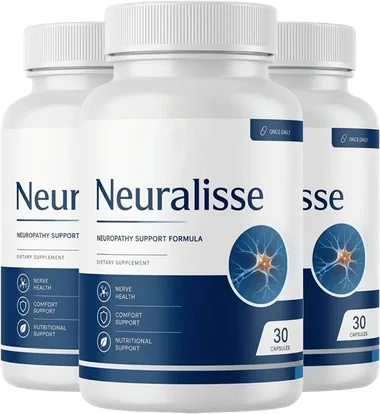
Try Neuralisse for 60 days1 capsule a day · from $49 a bottle · free U.S. shipping on 3 or 6 bottles
Order nowBefore you start
Who should ask a doctor before taking Neuralisse for its CoQ10?
- Anyone on warfarin, apixaban, clopidogrel or another blood thinner.
- People who use insulin or other diabetes medicines. Neuralisse also contains alpha-lipoic acid, which can lower blood sugar.
- People with heart conditions who are on several prescriptions.
- Anyone with surgery coming up, since supplements should be reviewed before procedures (ODS, What you need to know).
The label also rules out use under age 18 and by pregnant or nursing mothers. New numbness, tingling or burning in your feet needs a checkup, because diabetes is the leading cause of nerve problems in the U.S. (NINDS, Peripheral neuropathy).
Our take
Our honest verdict on CoQ10 in Neuralisse
CoQ10 is a gentle, well-tolerated nutrient, and its inclusion is not a safety worry for most adults. But its ceiling is under a third of typical research doses, the real amount is hidden, and larger trials have not confirmed benefits. It reads as a supporting ingredient, not a main one.
All six
What are the other ingredients in Neuralisse?
CoQ10 closes the blend. Turmeric extract comes just before it, and the list starts again with magnesium glycinate, the only ingredient with a printed amount.
FAQ
Coenzyme Q10 in Neuralisse: common questions
How much CoQ10 is in Neuralisse?
Each capsule holds at most 95 mg of coenzyme Q10 as ubiquinone. The bottle never states the true CoQ10 amount. CoQ10 is last of six in a 575 mg blend, and labels list blend ingredients from heaviest to lightest, so it can weigh no more than one sixth of the blend.
Is 95 mg of CoQ10 enough?
It is below the amounts used in research. LiverTox lists a typical dose of 300 to 1,200 mg a day. At most 95 mg is under one third of the low end, and the actual amount in Neuralisse is likely lower than that ceiling.
Can I take CoQ10 with warfarin?
Only with your doctor's approval. NCCIH says CoQ10 may interact with warfarin, and MSKCC notes a possible rise in bleeding risk with blood thinners. Neuralisse also contains turmeric, another ingredient flagged with blood thinners, so a pharmacist review is wise.
Should I take CoQ10 if I take a statin?
Ask your doctor. MSKCC notes that statins can lower the body's own CoQ10, which is why some people consider a supplement. Research has not settled whether adding it helps. Never stop or change a statin on your own.
What are the side effects of coenzyme Q10?
Side effects are usually mild. NCCIH reports trouble sleeping and upset stomach, and MSKCC adds nausea and diarrhea. No serious side effects have been reported in studies, and LiverTox calls CoQ10 an unlikely cause of liver injury.
What is the difference between ubiquinone and ubiquinol?
They are two forms of the same compound. Ubiquinone is the oxidized form found in most supplements, and the body converts it to ubiquinol as needed. The Neuralisse label lists ubiquinone. Our sources do not rank one form as clearly better.
Does CoQ10 help with neuropathy?
There is no good evidence that it does. Our sources include no human trials showing CoQ10 helps nerve symptoms, and larger trials in other areas have not confirmed benefits. Neuralisse is a supplement, not a treatment for neuropathy or any disease.
Who wrote this
Written and reviewed by
Plain-language pages built from the bottle label, the order page and linked public health sources such as NIH, FDA and CDC.
Last updated . Read our editorial standards and how we check reviews. This website is run by an American stocking outlet for Neuralisse, not by the manufacturer. We earn money when you buy through our order links.
Keep reading
More about Neuralisse
Alpha-lipoic acid
At most 287 mg per capsule: what the 600 mg studies found and why IV results do not carry over.
Read more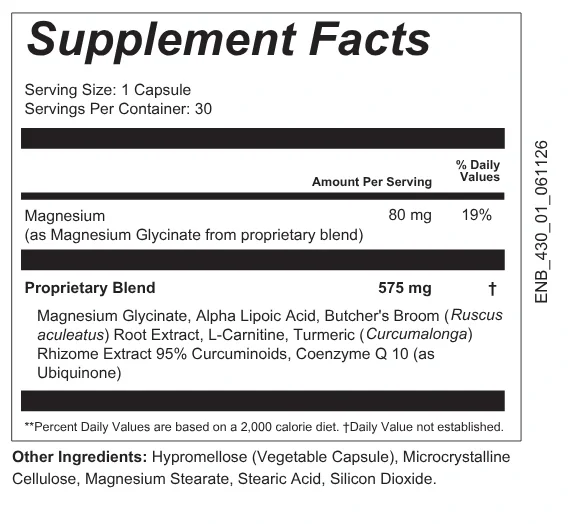
Supplement Facts
Every line of the Neuralisse label decoded, with the blend math and the details the bottle leaves out.
Read more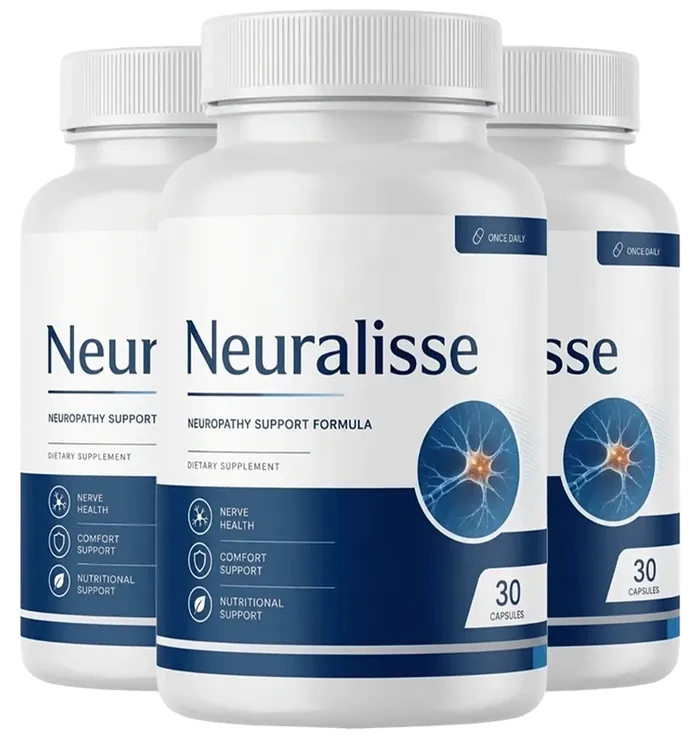
Side effects
Side effects of all six Neuralisse ingredients, the medicines they clash with, and when to stop.
Read moreAuthorized American Neuralisse outlet
Ready to try Neuralisse?
Pick a pack. One capsule a day, and every pack lasts at least 60 days, the whole money-back window.
- Secure checkout
- 60-day money-back window
- Ships from the U.S. with tracking