 Official website
Ingredient research
Magnesium Glycinate vs Other Magnesium Forms: What the NIH Actually Says
The NIH says magnesium aspartate, citrate, lactate and chloride are absorbed better than oxide and sulfate. Its fact sheet does not mention glycinate, so no NIH ranking exists for it. Adults need 310 to 420 mg a day, and supplements should stay under 350 mg. Neuralisse gives 80 mg as glycinate.
Written by the Neuralisse editorial teamUpdated · 9 min read
Basics
Why does magnesium come in so many forms?
Magnesium cannot sit in a capsule on its own. It is always bound to a partner, and that partner gives the form its name.
Magnesium oxide pairs it with oxygen. Magnesium citrate pairs it with citric acid. Magnesium glycinate pairs it with glycine, a small amino acid. The partner changes how well the mineral dissolves and how your gut reacts.
Your body uses magnesium for nerve and muscle function. Most of it comes from foods such as greens, nuts, seeds and beans, the NIH says (ODS, Magnesium).
Absorption
Which form of magnesium is best absorbed, according to the NIH?
The NIH names four forms as better absorbed: aspartate, citrate, lactate and chloride. It says these dissolve in liquid and are absorbed more completely than magnesium oxide and magnesium sulfate (ODS, Magnesium) (ODS, Magnesium (HP)).
| Form | Bound to | NIH absorption note |
|---|---|---|
| Magnesium aspartate | Aspartic acid | Absorbed more completely |
| Magnesium citrate | Citric acid | Absorbed more completely |
| Magnesium lactate | Lactic acid | Absorbed more completely |
| Magnesium chloride | Chloride | Absorbed more completely |
| Magnesium oxide | Oxygen | Absorbed less well |
| Magnesium sulfate | Sulfate | Absorbed less well |
| Magnesium glycinate | Glycine | Not covered by the NIH fact sheet |
Note the last row. Glycinate is popular and widely sold, but the NIH fact sheets do not rank it at all.
Glycinate
Is magnesium glycinate better than citrate or oxide?
No one can say so from the NIH sources. The fact sheets compare citrate, aspartate, lactate and chloride against oxide and sulfate, and glycinate is simply not in that comparison (ODS, Magnesium (HP)).
You will see websites call glycinate "the best absorbed" or "the gentlest form." Those may be marketing claims rather than findings from the NIH. We do not repeat them, and you should be careful when a label or ad does.
Glycinate is magnesium bound to glycine. It is a common, widely used form. Whether it beats citrate for absorption in people is not settled by the government sources we rely on.
For most adults, the bigger question is simpler: does the supplement keep you under the safe limit?
Daily needs
How much magnesium do adults need a day?
Adults need 310 to 420 mg of magnesium a day from all sources, the NIH says (ODS, Magnesium). The number depends on age and sex. Men need more than women.
310-420 mg a day
The adult range from food, drinks and supplements combined.
350 mg from supplements
The upper limit for adults. Magnesium in food does not count toward it.
420 mg Daily Value
The number the FDA uses for the % DV on supplement labels (FDA, Daily Values).
The 350 mg limit trips people up. It covers magnesium from supplements and medicines, such as antacids and laxatives, added together. Food is separate, because the kidneys clear extra magnesium from meals.
Safety
What happens if you take too much magnesium?
Too much magnesium from supplements most often causes diarrhea, nausea and stomach cramps, the NIH says (ODS, Magnesium). Some forms are more likely to do this than others. The NIH names carbonate, chloride, gluconate and oxide as the forms most often linked to diarrhea (ODS, Magnesium (HP)).
Very high doses can be much more serious, especially if the kidneys cannot clear the extra. People with kidney disease face a higher risk of magnesium building up (ODS, Magnesium (HP)). If you have kidney problems, ask your doctor before taking any magnesium supplement.
One more practical point: count every source. A multivitamin, a sleep blend, an antacid and a nerve formula can each hold some magnesium. Added up, they can push you past 350 mg without you noticing.
Try Neuralisse for 60 days1 capsule a day · from $49 a bottle · free U.S. shipping on 3 or 6 bottles
Order nowMedicines
What medicines interact with magnesium supplements?
Magnesium can bind some medicines in the gut and block them, so timing matters. The NIH lists these key interactions (ODS, Magnesium (HP)):
| Medicine | What happens | What to do |
|---|---|---|
| Oral bisphosphonates (bone loss) | Magnesium can reduce absorption | Keep 2 hours apart |
| Tetracycline or quinolone antibiotics | Magnesium can block the antibiotic | Take the antibiotic 2 hours before or 4-6 hours after |
| Some diuretics | Can raise or lower magnesium loss | Ask your doctor |
| Long-term proton pump inhibitors | Can lower blood magnesium | Your doctor may check levels |
Your pharmacist can build a simple schedule around these gaps. Bring every bottle you take, supplements included.
- One steady time, such as 8 am
Take 1 capsule a day. The label sets no time, so pick one you will not forget, for example with breakfast.
- Keep a 2-hour gap
Magnesium can block bisphosphonates and some antibiotics. Space them as the NIH fact sheet advises; ask your pharmacist.
- Evening foot check, about 9 pm
The CDC tells people with diabetes to check their feet every day, even if they feel fine.
- Night, 11 pm to 7 am
Nerve discomfort is often worse at night. Note how nights feel so you can judge the 60 days honestly.
The label says one capsule daily and nothing about timing. Medicine spacing (ODS, Magnesium (HP)); foot checks (CDC, Diabetes and your feet); night symptoms (NIDDK, Peripheral neuropathy).
Neuralisse
How much magnesium is in Neuralisse?
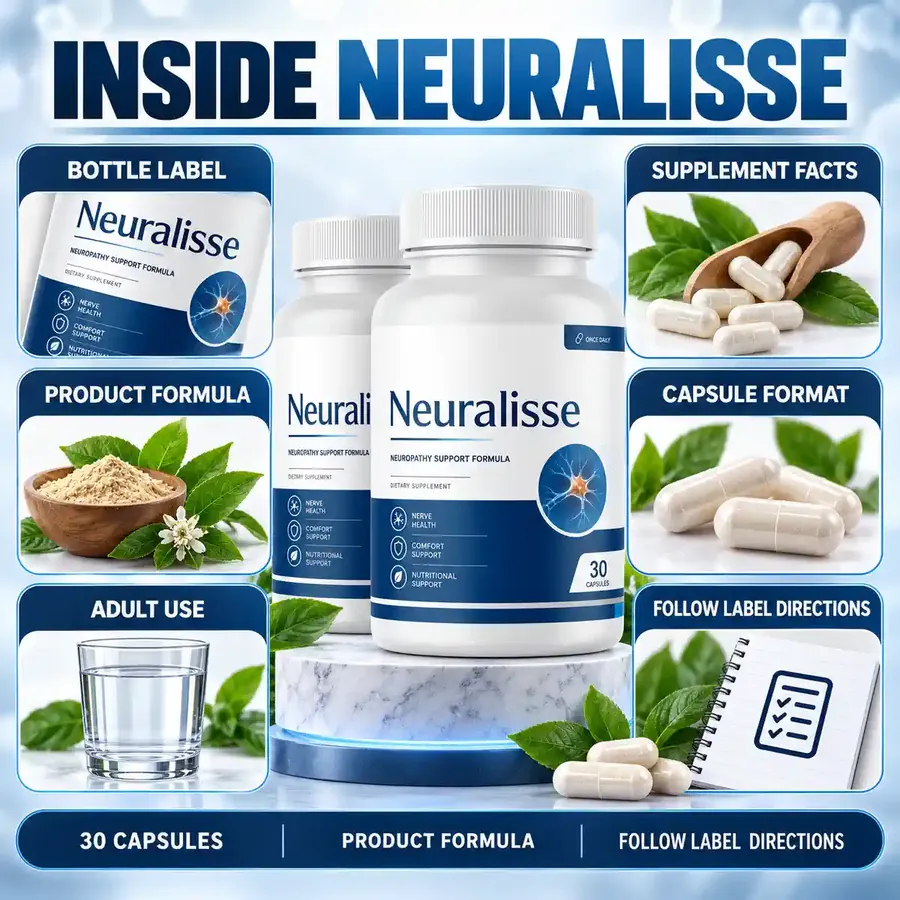
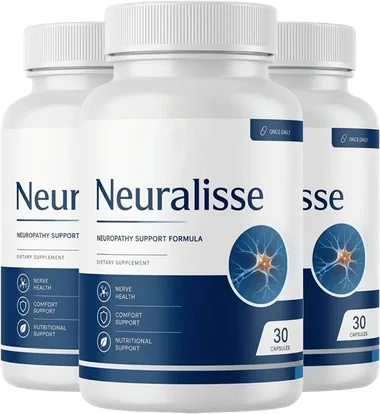
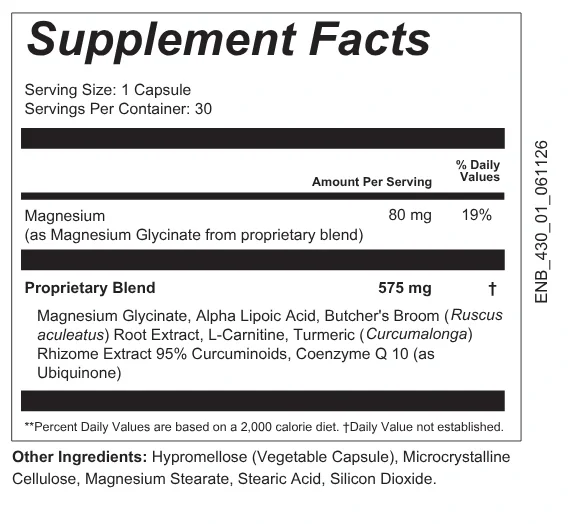
Each Neuralisse capsule gives 80 mg of magnesium, or 19% of the Daily Value, as magnesium glycinate. It is the only ingredient in the 575 mg blend with its own printed amount.
That is a modest dose. At one capsule a day, it uses less than a quarter of the 350 mg supplement limit. It leaves room for magnesium you get from food, though you should still count any other supplements.
- The amount is printed, which many blends do not do.
- 80 mg is well under the adult upper limit.
- Glycinate is not ranked by the NIH, so absorption claims are not ours to make.
- It still needs the same medicine gaps as any magnesium.
See the full panel on our Supplement Facts page and the details on the magnesium glycinate ingredient page. Our how-to-use guide covers spacing it from medicines.
Checklist
How do you choose a magnesium supplement?
Find the elemental amount
Look for milligrams of magnesium, not just the weight of the compound.
Add up every source
Stay under 350 mg a day from supplements and medicines combined.
Check the form claims
The NIH backs citrate, aspartate, lactate and chloride over oxide and sulfate. It is silent on glycinate.
Ask about timing
Plan gaps around bone and antibiotic medicines, and ask first if you have kidney disease.
Bottom line
Is magnesium glycinate worth choosing?
It is a common form, but the NIH does not rank it. Focus on the dose and your medicine timing. At 80 mg a capsule, Neuralisse keeps magnesium modest and printed. Tingling or numbness in the feet is a reason to see a doctor, not just to change your magnesium form.
FAQ
Magnesium glycinate questions people ask
Is magnesium glycinate better absorbed than magnesium citrate?
The NIH does not say. Its fact sheets list aspartate, citrate, lactate and chloride as absorbed better than oxide and sulfate, but they do not mention glycinate. Claims that glycinate is the best absorbed come from marketing, not from that NIH comparison.
What is the difference between magnesium glycinate and magnesium oxide?
Glycinate binds magnesium to the amino acid glycine, while oxide binds it to oxygen. The NIH says oxide is absorbed less well than forms like citrate. It does not rank glycinate, so a direct NIH comparison between the two does not exist.
How much magnesium is too much in a day?
For adults, the upper limit is 350 mg a day from supplements and medicines combined, according to the NIH. Food does not count toward it. Going over often causes diarrhea, nausea and cramps, and people with kidney disease face higher risk.
How much magnesium is in Neuralisse?
Each capsule has 80 mg of magnesium, 19% of the Daily Value, as magnesium glycinate. It is the only blend ingredient with a printed amount. One capsule a day uses less than a quarter of the 350 mg supplement limit.
Can I take magnesium with antibiotics?
Only with spacing. The NIH says to take tetracycline or quinolone antibiotics at least 2 hours before or 4 to 6 hours after magnesium. Otherwise magnesium can bind the drug and keep it from working. Ask your pharmacist for a schedule.
Can I take magnesium with bone medicine like alendronate?
Yes, with a gap. The NIH advises taking oral bisphosphonates and magnesium at least 2 hours apart, because magnesium can reduce how much of the drug you absorb. Your pharmacist can confirm the right timing for your medicine.
Who wrote this
Written and reviewed by
Plain-language pages built from the bottle label, the order page and linked public health sources such as NIH, FDA and CDC.
Last updated . Read our editorial standards and how we check reviews. This website is run by an American stocking outlet for Neuralisse, not by the manufacturer. We earn money when you buy through our order links.
Keep reading
More about Neuralisse
Magnesium glycinate
80 mg of magnesium per capsule: how it fits daily needs, the supplement limit and medicine timing.
Read moreSupplement Facts
Every line of the Neuralisse label decoded, with the blend math and the details the bottle leaves out.
Read more
How to use
One capsule a day, a steady time, a 2-hour medicine gap and simple rules for missed doses and travel.
Read moreAuthorized American Neuralisse outlet
Ready to try Neuralisse?
Pick a pack. One capsule a day, and every pack lasts at least 60 days, the whole money-back window.
- Secure checkout
- 60-day money-back window
- Ships from the U.S. with tracking